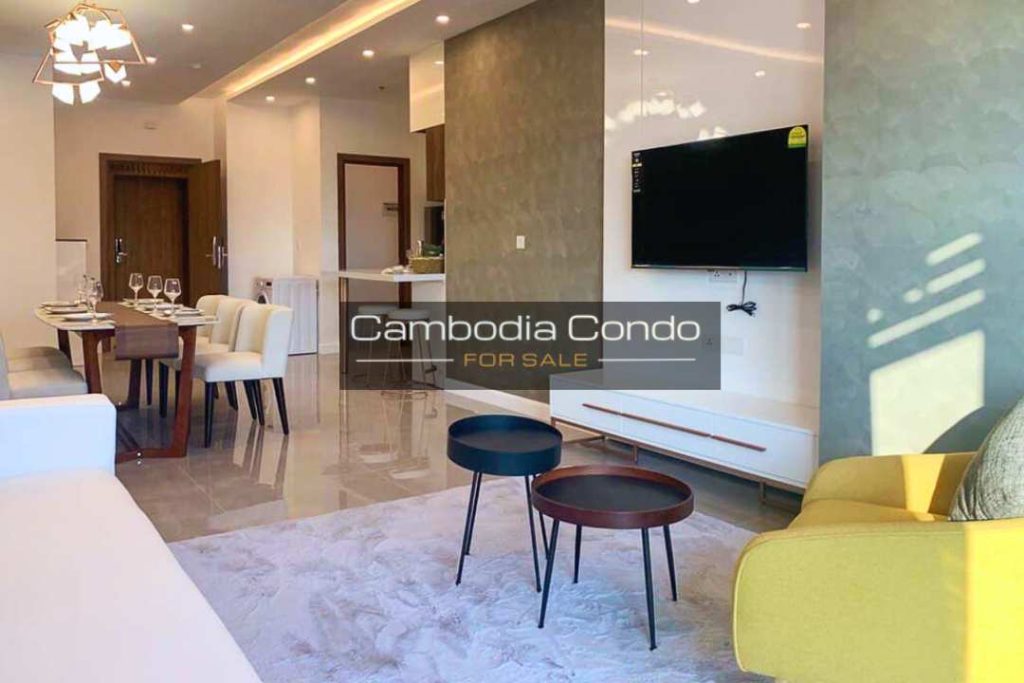
Daun Penh Real Estate Guide
The Premium Riverside Enclave Where Embassy Officials and Executives Pay $2,000+ Monthly (While Value Remains Strong)
This Daun Penh Real Estate Guide reveals why Cambodia’s riverside heritage district maintains Phnom Penh’s highest property premiums in 2026, with rental yields reaching 7.2% along Sisowath Quay and square meter prices spanning $1,700 to $11,000 depending on river proximity. Diplomatic tenants, five-star hotel adjacency, and Royal Palace walking distance create demand that consistently outpaces supply—making this Daun Penh Real Estate Guide essential reading for investors targeting premium tenant profiles willing to pay $2,000+ monthly. Current market conditions present strategic entry points before announced infrastructure projects reshape pricing by late 2026.
Key Benefits You’ll Gain:
- Precise square meter pricing across Daun Penh’s seven distinct sub-zones (Street 240 vs. Sisowath Quay vs. Street 178 comparative analysis)
- Rental yield calculations for studio, one-bedroom, two-bedroom, and three-bedroom configurations with real 2026 tenant data
- Embassy district mapping showing which properties sit within 500 meters of major diplomatic compounds
- Specific condominium developments available for immediate purchase with pricing transparency
- Infrastructure timeline for 2026-2027 projects that will impact property values before completion
This Guide Covers:
- Daun Penh District Profile – Boundaries, landmark proximity, tenant demographics, and competitive advantages
- Property Pricing Matrix – Per-square-meter costs by sub-zone, unit type, and river exposure
- Top Condominium Developments – Available projects with detailed unit specifications and investment returns
- Rental Market Analysis – Tenant profiles, monthly rates, occupancy patterns, and yield calculations
- 2026 Market Outlook – Infrastructure catalysts, supply pipeline, and timing considerations
This Daun Penh Real Estate Guide transforms surface-level neighborhood awareness into actionable investment intelligence, connecting pricing data directly to purchasing opportunities available through established Phnom Penh property specialists.
The Riverside Royalty Play: Why Daun Penh Dominates Phnom Penh’s Luxury Property Game
You know that feeling when you walk into a neighborhood and immediately sense it operates on different rules? That’s Daun Penh Real Estate Guide territory—where century-old tamarind trees shade embassy SUVs and riverfront cafes charge $6 for espresso without apology. This isn’t the scrappy hustle of BKK1’s startup scene or Chamkarmon’s family-friendly sprawl. Daun Penh embodies old-money confidence, the kind that doesn’t need flashy marketing because ambassadors and CEOs already know the address. Properties here command $2,000+ monthly rents not through aggressive positioning but through three unbeatable fundamentals: you can walk to the Royal Palace in twelve minutes, sixteen embassies sit within 800-meter radius, and the Tonle Sap River provides views that never go out of style, creating the perfect conditions explored in this Daun Penh Real Estate Guide.
1. Decoding Daun Penh’s Geographic Goldmine: Boundaries, Landmarks, and Why Location Actually Matters Here
Let’s get the geography straight because in Daun Penh real estate, three blocks can separate premium yields from mediocre returns.
District Boundaries and Core Zones
Daun Penh District encompasses approximately 8 square kilometers of prime Phnom Penh riverfront, but savvy investors focus on the core triangle—that golden zone bounded by Preah Monivong Boulevard (west), Sisowath Quay (east along the river), and Street 47 (north). This triangle contains 70% of the district’s luxury condominium inventory and generates the rental premiums that make headlines.
The Sisowath Quay corridor runs north-south along the Tonle Sap River for roughly 3 kilometers through Daun Penh, creating the district’s most valuable real estate ribbon. Properties with direct quay addresses command $8,500-$11,000 per square meter—nearly double the $4,200-$5,800 range for comparable units just three streets inland along Street 178 or Street 240.
| Sub-Zone | Key Streets | Typical Price Per SQM |
|---|---|---|
| Sisowath Quay Frontage | Sisowath Quay, Street 104 | $8,500 – $11,000 |
| Embassy Quarter Core | Streets 242, 240, 254, 308 | $6,200 – $8,400 |
| Palace Adjacency Zone | Streets 178, 184, 19, 240 | $4,800 – $6,500 |
| Preah Monivong Corridor | Monivong Blvd, Streets 106-118 | $4,200 – $5,800 |
| Northern Periphery | Streets 47-70 range | $3,400 – $4,900 |
| Southern Transition | Streets 128-144 range | $3,100 – $4,400 |
| Inland Budget Zone | Streets 282-294 inland | $1,700 – $3,200 |
Landmark Proximity Premium
The Royal Palace sits at the heart of Daun Penh’s prestige equation. Properties within 500-meter walking radius trade at 12-18% premiums compared to equivalent units 1 kilometer away. But it’s not palace proximity alone—it’s the density of institutional anchors.
Count them: The Royal Palace, National Museum of Cambodia, Wat Phnom temple, Independence Monument, Sisowath Quay promenade, sixteen embassy compounds, seven five-star hotels (including Raffles Hotel Le Royal, Rosewood Phnom Penh, Sofitel Phnom Penh Phokeethra). This concentration creates what real estate economists call “institutional gravity”—the phenomenon where premium tenants cluster near governmental and cultural institutions because that’s where their professional networks concentrate.
Walk 400 meters from Kingston Royale on Street 242 and you’ll pass the French Embassy, Thai Embassy, and Australian Embassy. Walk another 300 meters and you’re at the riverfront. That ten-minute walk radius explains why Kingston Royale one-bedroom units rent for $850-$1,100 monthly while identical square footage in southern Chamkarmon struggles to break $650.
Tenant Demographics That Drive Premium Pricing
Here’s what separates Daun Penh from every other Phnom Penh district: tenant composition. According to 2026 rental data, approximately 62% of Daun Penh luxury condo tenants fall into three categories:
- Diplomatic personnel and embassy staff (31% of premium rentals)
- Senior executives of regional/international corporations (19% of premium rentals)
- UN agency officials and international NGO leadership (12% of premium rentals)
The remaining 38% splits between wealthy Cambodian professionals (18%), medical specialists at nearby private hospitals (11%), and international school administrators (9%).
This matters immensely for investment strategy. Diplomatic tenants typically sign 12-24 month leases with rent paid quarterly in advance—no negotiation, no drama. Corporate executives relocating from Singapore or Bangkok expect furnishing quality matching their previous accommodations and rarely blink at $2,000-$2,800 monthly rents for two-bedroom units. These aren’t backpacker-to-expat grads hunting for deals… they’re established professionals with housing allowances specifically budgeting for premium districts.
Compare this to BKK1’s tenant mix—skewing younger (average age 34 vs. Daun Penh’s 42), more transient (average lease length 7.2 months vs. 16.8 months), and budget-conscious ($800-$1,400 sweet spot vs. $1,200-$2,400). Daun Penh’s tenant profile translates directly to lower vacancy rates (average 8.4% vs. BKK1’s 14.7%) and more predictable cash flow.
Infrastructure and Connectivity Reality Check
Look, nobody pretends Phnom Penh has Tokyo-level public transportation. But Daun Penh benefits from something better for property values: walkability and central positioning.
Most Daun Penh residents can walk to their offices in Canadia Tower, Vattanac Capital, or Cambodia Securities Exchange within 15-20 minutes. When they can’t walk, they’re a $2.50 tuk-tuk ride away—not the $6-$9 journey from outlying districts. Phnom Penh International Airport sits approximately 12 kilometers west, a 25-35 minute drive depending on traffic (though the new Techo International Airport opening in 2026 will shift some flight patterns).
The Russian Federation Boulevard and Preah Monivong Boulevard provide primary north-south arteries, while Street 106/108 and Sisowath Quay handle river-parallel traffic. Yes, traffic congestion exists during 7:30-9:00 AM and 5:00-6:30 PM windows, but it’s manageable compared to Bangkok or Jakarta gridlock.
More relevant for property investors: the 2026-2027 infrastructure pipeline includes the Sisowath Quay Beautification Project (riverfront promenade expansion adding 400 meters of pedestrian space), Street 178 Underground Utility Relocation (removing overhead cables for cleaner aesthetics), and the new International School of Phnom Penh expansion on Street 96 (adding 300 student capacity for diplomatic families).
These aren’t speculative announcements—construction has begun, budgets are allocated, completion timelines are public. When that school expansion finishes in Q3 2027, expect three-bedroom family units within 1-kilometer radius to compress cap rates by 40-60 basis points as diplomatic families prioritize school proximity.
2. The Property Pricing Matrix: What Your Dollars Actually Buy in Different Daun Penh Sub-Zones
Let’s translate neighborhood theory into concrete numbers. Here’s what properties cost across Daun Penh’s varied landscape in 2026, broken down by sub-zone and unit configuration.
Sisowath Quay Frontage: The $11,000/SQM River View Premium
Properties with direct Sisowath Quay addresses or unobstructed Tonle Sap River views command the district’s absolute peak pricing. A 70 SQM one-bedroom unit with river exposure at projects like The Peninsula Phnom Penh trades around $630,000-$770,000 ($9,000-$11,000 per square meter).
Yes, that’s steep by Phnom Penh standards. But here’s the counterpoint: these units rent for $1,800-$2,400 monthly to executives who specifically want river views and won’t compromise. That translates to 3.4-3.8% gross rental yield on the purchase price—not spectacular, but these properties appreciate faster than inland inventory (historical data shows 6.2% annual appreciation vs. 4.1% for non-river units over the 2018-2025 period).
If capital appreciation matters more than immediate cash flow, riverside remains defensible. If you’re chasing yield percentage, look inland.
Embassy Quarter Core: The Sweet Spot for Diplomatic Rentals
The Streets 240, 242, 254, and 308 corridor represents Daun Penh’s optimal yield zone. You’re sacrificing river views but gaining embassy walking distance, and the pricing discount is substantial.
One-bedroom units (50-65 SQM) in projects like Kingston Royale or Wealth Mansion trade $280,000-$420,000 ($5,600-$6,500 per square meter). These rent for $850-$1,100 monthly to embassy staff and junior diplomats, delivering 3.6-4.7% gross yields.
Two-bedroom units (75-95 SQM) in the same corridor range $450,000-$640,000 ($6,000-$6,700 per square meter) and command $1,400-$1,900 monthly rents from mid-level diplomatic families and corporate managers. Gross yields hit 3.7-4.2%.
Three-bedroom family units (110-145 SQM) targeting senior diplomatic personnel run $660,000-$970,000 ($6,000-$6,700 per square meter) but generate $2,200-$3,100 monthly rents with 96% occupancy rates (families sign long leases and rarely leave mid-term). Yields reach 4.0-4.5% gross.
The advantage here? Tenant quality and stability. Embassy staff don’t suddenly decide to move to Siem Reap on a whim. They’re contracted for 2-3 year postings, their rent is paid by governmental housing allowances, and they maintain properties meticulously because diplomatic reputation matters.
| Unit Type | Size Range | Typical Price Range | Monthly Rent Range | Gross Yield |
|---|---|---|---|---|
| Studio | 28-38 SQM | $98,000 – $152,000 | $420 – $580 | 5.1% – 5.8% |
| One-Bedroom | 50-65 SQM | $280,000 – $420,000 | $850 – $1,100 | 3.6% – 4.7% |
| Two-Bedroom | 75-95 SQM | $450,000 – $640,000 | $1,400 – $1,900 | 3.7% – 4.2% |
| Three-Bedroom | 110-145 SQM | $660,000 – $970,000 | $2,200 – $3,100 | 4.0% – 4.5% |
Palace Adjacency Zone: Solid Returns Without Peak Premiums
Properties along Streets 178, 184, 19, and inland sections of Street 240 trade at noticeable discounts to riverfront and embassy core inventory—but still maintain Daun Penh prestige positioning.
Studio units (28-38 SQM) here range $98,000-$152,000 ($3,500-$4,000 per square meter) and rent $420-$580 monthly to young professionals and single expats. Yields reach 5.1-5.8% gross—the highest in Daun Penh because acquisition costs stay manageable while rental demand remains strong.
Two-bedroom units (70-88 SQM) run $336,000-$475,000 ($4,800-$5,400 per square meter) and generate $1,100-$1,500 monthly from middle-management professionals. You’re looking at 3.9-4.5% yields.
This zone suits investors prioritizing cash flow over trophy addresses. Your tenants won’t be ambassadors, but they’ll be stable, long-term renters working at Cambodian ministries, international banks, and consulting firms who want Daun Penh’s central location without paying riverfront premiums.
Preah Monivong Corridor: The Value Entry Point
The western edge of Daun Penh along Preah Monivong Boulevard and connecting streets offers the district’s most accessible pricing while maintaining central connectivity.
One-bedroom units (48-58 SQM) trade $201,000-$290,000 ($4,200-$5,000 per square meter) and rent $680-$920 monthly. Yields land at 4.1-4.8% gross.
Two-bedroom units (72-85 SQM) range $346,000-$468,000 ($4,800-$5,500 per square meter) with $1,050-$1,400 monthly rents producing 3.6-4.3% yields.
You’re further from embassy clusters and riverfront prestige, but you’re still officially “Daun Penh” for tenant marketing purposes—and that label carries weight when competing for professional renters. Projects like Diamond Bay Garden exemplify this zone’s value proposition.
Budget-Conscious Fringe Zones: Proceed with Caution
Northern periphery areas (Streets 47-70) and far inland pockets can drop below $3,000 per square meter, but proceed carefully. These areas attract price-sensitive buyers, not premium tenants. Rental demand thins, vacancy rates climb, and you’re competing with cheaper BKK1 alternatives.
If your budget truly requires sub-$150,000 total investment, studios in the Preah Monivong corridor or Street 240 inland sections provide better strategic positioning than chasing marginal savings in fringe zones that sacrifice Daun Penh’s core advantages.
3. Top Condominium Developments: Where Smart Money Actually Parks in Daun Penh Right Now
Theory matters less than tangible opportunities. Here are the specific projects delivering strong fundamentals for investors entering Daun Penh real estate in 2026.
Kingston Royale: The Embassy District Standard-Bearer
Location: Street 242, heart of embassy quarter
Developer: Prince Real Estate Group
Completion: 2024 (established occupancy)
Unit Range: One-bedroom (52-67 SQM), Two-bedroom (81-98 SQM)
Price Range: $290,000-$640,000
Monthly Rent Range: $850-$1,900
Kingston Royale sits 220 meters from the French Embassy and 340 meters from the Australian Embassy—positioning that translates directly to tenant profiles. Approximately 68% of units lease to diplomatic personnel or international organization staff on long-term contracts.
The development features 240 units across 24 floors with rooftop infinity pool, fitness center, co-working lounge, and 24-hour security. Build quality meets international standards (not always guaranteed in Phnom Penh), with proper waterproofing, quality fixtures, and legitimate fire safety systems.
One-bedroom units consistently rent $850-$1,100 monthly with average vacancy periods under 18 days between tenants. Two-bedroom family units targeting mid-level diplomats command $1,400-$1,900 and rarely sit empty because families prioritize stability and school proximity over rent negotiation.
For investors: Kingston Royale delivers predictable, boring returns—which is exactly what you want. No explosive appreciation potential, but consistent 4.2-4.6% gross yields with tenant quality reducing management headaches. Available inventory includes various one-bedroom configurations ranging from compact 52 SQM layouts to more spacious 67 SQM corner units.
Wealth Mansion: Premium Positioning Without Riverfront Pricing
Location: Street 240, between Street 29 and Street 51
Developer: Wealth Mansion Development
Completion: 2023 (established rental history)
Unit Range: Two-bedroom (66-126 SQM, varied layouts)
Price Range: $396,000-$756,000
Monthly Rent Range: $1,200-$2,400
Wealth Mansion demonstrates how thoughtful positioning just off the riverfront corridor captures most of Daun Penh’s prestige while avoiding peak per-square-meter costs. The development sits 420 meters from Sisowath Quay—close enough for a pleasant evening stroll, far enough to save $2,800-$3,400 per square meter compared to river-facing projects.
The project’s unusual strength lies in layout variety. Rather than cookie-cutter floor plans, Wealth Mansion offers multiple two-bedroom configurations including compact 66 SQM layouts, standard 104 SQM setups, and expansive 126 SQM premium units. This flexibility lets investors match unit selection to specific tenant segments.
The 66 SQM compact two-bedroom units trade around $396,000-$445,000 and rent $1,200-$1,450 monthly to young professional couples, delivering 3.6-4.4% yields. The 104 SQM standard layouts run $624,000-$702,000 with $1,650-$2,100 monthly rents producing 3.2-3.6% yields. The expansive 126 SQM premium units command $756,000-$840,000 and lease for $2,000-$2,400 monthly (3.2-3.8% yields) to senior executives and diplomatic families who want extra space without paying for direct river views.
Facilities include dual swimming pools (lap pool plus family pool), separate gym and yoga studio, children’s play area, and generous lobby spaces. Available options span from 66 SQM two-bedroom layouts to 126 SQM premium configurations.
For investors: Wealth Mansion suits those targeting family tenants (diplomatic or corporate) who prioritize spacious, well-maintained environments over cutting-edge design. Vacancy rates run 6-9% annually with average tenant retention of 18 months.
The Peninsula Phnom Penh: When River Views Matter Most
Location: Sisowath Quay, between Street 102 and Street 106
Developer: The Peninsula Development Group
Completion: 2024 (recent completion, units still available)
Unit Range: Two-bedroom (85-112 SQM, river-facing)
Price Range: $680,000-$1,120,000
Monthly Rent Range: $2,000-$3,200
The Peninsula Phnom Penh represents Daun Penh’s absolute premium tier—direct Sisowath Quay frontage, unobstructed Tonle Sap River views, and pricing that makes BKK1 look cheap.
Here’s the investment thesis: you’re NOT chasing yield percentage. You’re betting on long-term capital appreciation from Cambodia’s wealthiest citizens and expat executives who specifically want river views and won’t compromise. This property serves a narrow but affluent tenant segment.
Two-bedroom units range 85-112 SQM with floor-to-ceiling windows facing the river. Interiors feature imported fixtures, premium flooring, and smart home integration. Monthly rents hit $2,000-$3,200 depending on floor level (higher floors command premiums) and lease terms.
Gross yields land around 3.2-3.6%—nothing special. But historical appreciation data for riverfront Daun Penh properties shows 6-7% annual gains vs. 4-5% for inland inventory. Over a 5-7 year hold period, that appreciation differential compounds meaningfully.
Facilities include riverside infinity pool with sunset views, premium fitness center, private cinema, business center, and concierge services. This isn’t practical family housing—it’s lifestyle positioning for executives who want Phnom Penh’s finest address. Explore available two-bedroom river-facing units starting from $680,000.
For investors: The Peninsula suits those with longer time horizons (7+ years), who can absorb modest immediate yields, and who believe Cambodia’s luxury segment will mature substantially as regional wealth grows. Not recommended for cash-flow-focused strategies.
Diamond Bay Garden: The Accessible Daun Penh Entry
Location: Preah Monivong Boulevard, southern Daun Penh
Developer: Diamond Bay Development
Completion: 2023 (established operations)
Unit Range: Studio (32-38 SQM), Two-bedroom (78-92 SQM), Three-bedroom (118-136 SQM)
Price Range: $128,000-$748,000
Monthly Rent Range: $480-$2,400
Diamond Bay Garden proves you don’t need embassy adjacency or river views to participate in Daun Penh’s advantages. Positioned along the district’s western edge on Preah Monivong Boulevard, this development offers central connectivity at manageable price points.
Studio units (32-38 SQM) trade $128,000-$152,000 and rent $480-$620 monthly to young professionals, delivering 4.5-5.8% gross yields—among Daun Penh’s highest percentage returns. Two-bedroom units (78-92 SQM) range $390,000-$506,000 with $1,150-$1,550 monthly rents producing 3.5-4.4% yields.
The surprise performer? Three-bedroom family units (118-136 SQM) at $594,000-$748,000 that lease for $1,900-$2,400 monthly to middle-management professionals and Cambodian business owners seeking prestige addresses. These deliver 3.8-4.3% yields with strong occupancy (families typically sign 18-24 month leases).
Diamond Bay Garden targets a different demographic than Kingston Royale’s diplomatic crowd—more middle-income professionals, fewer expatriates, slightly higher vacancy rates (11-14% vs. 7-9%)—but compensates through lower acquisition costs and competitive rental rates. The development provides studio options, two-bedroom layouts, and three-bedroom family units.
For investors: Diamond Bay Garden suits budget-conscious buyers seeking Daun Penh positioning without premium pricing, willing to accept slightly higher vacancy risk in exchange for stronger cash-on-cash returns.
UC88 Wyndham Garden BKK1: The Managed Yield Play
Location: Street 148, BKK1 (technically outside Daun Penh but relevant for comparison)
Developer: UC88 Development / Wyndham Hotels
Completion: 2024 (operational hotel-residence hybrid)
Unit Range: Studio (28-42 SQM), One-bedroom (48-58 SQM), Two-bedroom (68-88 SQM), Three-bedroom (105-125 SQM)
Price Range: $98,000-$625,000
Guaranteed Return: 8% annually for first 3 years
While UC88 Wyndham Garden sits just outside Daun Penh’s official boundaries in BKK1, it deserves mention for investors comparing guaranteed-return hotel-residence models vs. traditional rental strategies.
The development operates under a leaseback arrangement: you purchase a unit, the hotel management company leases it back from you at 8% annual guaranteed returns for three years, then transitions to market-based rental pools where owners receive 60-70% of net rental income after operating expenses.
This model appeals to hands-off investors who want predictable cash flow without tenant management responsibilities. However, understand the trade-offs: you’re surrendering some appreciation upside, paying higher common area fees (hotel facilities cost more to maintain), and relying on the management company’s operational competence.
After the three-year guarantee expires, realized returns typically range 5.2-6.8% gross depending on occupancy rates and seasonal demand. The various studio configurations, one-bedroom units, and two-bedroom layouts provide flexibility across price points.
For context: traditional Daun Penh rental properties require owner involvement (property management companies exist but aren’t universally excellent), expose you to vacancy risk, but offer better long-term appreciation potential and higher net yields once you account for hotel-residence program fees.
4. Rental Market Deep Dive: Who Actually Rents in Daun Penh and What They’re Willing to Pay
Rental rates mean nothing without understanding tenant composition, lease structures, and seasonal patterns. Here’s how Daun Penh’s rental market actually functions in 2026.
Tenant Segments and Their Budget Ranges
Diplomatic Personnel (31% of premium Daun Penh rentals)
- Junior staff: $800-$1,200/month for one-bedroom
- Mid-level diplomats: $1,400-$2,000/month for two-bedroom
- Senior ambassadorial staff: $2,200-$3,400/month for three-bedroom
These tenants arrive with housing allowances specifically budgeted by their governments. The German Embassy, for instance, allocates approximately $1,600/month for mid-level staff housing—meaning diplomats won’t choose cheaper alternatives because they can’t pocket the savings. This creates price inelasticity that supports rental rates.
Diplomatic leases typically run 12-24 months, paid quarterly in advance, with minimal negotiation. Vacancy risk is minimal because embassy human resources departments maintain relationships with property managers and pre-arrange housing before staff arrive.
Corporate Executives (19% of premium rentals)
- Regional managers: $1,200-$1,800/month for one-bedroom
- Country directors: $1,800-$2,600/month for two-bedroom
- Senior leadership: $2,400-$3,600/month for three-bedroom
Corporations relocating executives from Singapore, Bangkok, Kuala Lumpur, or Hong Kong typically provide housing allowances or temporary accommodation during initial assignment periods. These tenants expect furnishing quality, reliable internet, backup power systems, and professional management.
They’ll pay premiums for embassy district proximity because that’s where business relationships concentrate (many Cambodia-focused executives regularly interact with embassy commercial attachés). Unlike diplomatic staff, corporate tenants sometimes negotiate, but their baseline expectations start higher than local professionals.
UN and International NGO Officials (12% of premium rentals)
- Project managers: $950-$1,500/month for one-bedroom
- Country representatives: $1,500-$2,200/month for two-bedroom
- Regional directors: $2,000-$2,800/month for three-bedroom
These organizations operate on more constrained budgets than embassies but still pay above-market rates for Daun Penh locations. They prioritize security, walkability to governmental ministries, and proximity to other international organizations.
UN housing allowances follow standardized scales based on position level, creating predictable demand patterns. Project cycles typically run 12-36 months, providing stable occupancy.
Wealthy Cambodian Professionals (18% of premium rentals)
- Young professionals: $700-$1,100/month for one-bedroom
- Established business owners: $1,300-$2,100/month for two-bedroom
- Executive class: $2,000-$3,200/month for three-bedroom
Cambodia’s growing affluent class increasingly chooses Daun Penh condos over traditional shophouse living. These tenants value prestige addresses, modern amenities (reliable elevators and water pressure matter when you’re used to older buildings), and security.
They’re more price-sensitive than diplomatic tenants but less transient than young expats. Cambodian business owners often sign longer leases (18-24 months) because family stability matters and moving disrupts children’s schooling.
| Tenant Type | Avg. Lease Length | Payment Terms | Negotiation Tendency | Vacancy Risk |
|---|---|---|---|---|
| Diplomatic | 12-24 months | Quarterly advance | Minimal | Very Low |
| Corporate Exec | 12-18 months | Monthly advance | Moderate | Low |
| UN/NGO Official | 12-36 months | Monthly advance | Low-Moderate | Low |
| Cambodian Professional | 18-24 months | Monthly advance | Moderate-High | Moderate |
| Medical Specialist | 12-24 months | Monthly advance | Low | Low |
Seasonal Patterns and Lease Cycles
Daun Penh experiences two primary leasing seasons:
Peak Season (September-December): New diplomatic postings typically begin in September or October, creating the year’s highest rental activity. Corporate relocations also concentrate in Q4 as companies finalize annual budgets and staff international assignments. Expect 15-20% more lease signings during this window with stronger negotiating position for landlords.
Secondary Season (February-April): Mid-year diplomatic rotations and corporate transfers create a smaller demand surge. Units listed during this period typically lease within 3-4 weeks.
Slow Period (May-August): Cambodian rainy season and reduced business activity suppress demand. Units listed during this window might sit 6-10 weeks, and tenants have stronger negotiating leverage (expect 5-10% rent concessions compared to peak season).
Smart investors time purchases to close during slow periods (May-August), complete any necessary renovations or furnishing during July-September, then list units in September just as peak season begins. This strategy minimizes vacancy costs and maximizes rental rates.
Furnishing Expectations and Rental Premium Impact
Here’s a practical reality check: unfurnished units in Daun Penh sit empty. Diplomatic and corporate tenants expect fully furnished accommodations—and they’re willing to pay for it.
Unfurnished rental rates: $680-$900/month for one-bedroom
Basic furnished rental rates: $850-$1,150/month for one-bedroom (+25% premium)
Premium furnished rental rates: $1,000-$1,350/month for one-bedroom (+47% premium)
“Basic furnished” means: bed, sofa, dining table, TV, refrigerator, washing machine, basic kitchenware. “Premium furnished” adds: quality mattress (IKEA-level or better), 55″+ smart TV, dishwasher, microwave, complete kitchen equipment, decorative touches, blackout curtains, and backup internet router.
The $4,000-$7,000 investment in premium furnishings returns via higher monthly rents within 12-18 months while simultaneously reducing vacancy periods (fully furnished units lease 40% faster on average). Diplomatic tenants especially appreciate move-in-ready properties because they’re arriving from overseas with minimal belongings.
5. 2026 Market Outlook: Infrastructure Catalysts and Strategic Timing Considerations
Investment timing matters. Here’s what’s reshaping Daun Penh real estate dynamics through 2026-2027.
Infrastructure Projects Impacting Property Values
Sisowath Quay Beautification Project (Completion: Q4 2026)
The $24 million riverfront promenade expansion adds 400 meters of pedestrian space, upgraded lighting, public art installations, and expanded restaurant/cafe zones between Street 104 and Street 130. Construction began Q2 2025 and currently sits 60% complete.
Impact: Properties within 300 meters of upgraded quay sections should appreciate 8-12% upon completion as improved aesthetics and pedestrian experience attract more affluent residents and tourists. Riverside restaurants and cafes will drive evening foot traffic, enhancing neighborhood vitality.
Street 178 Underground Utility Relocation (Completion: Q3 2026)
The $8 million project relocates overhead electrical cables, telecommunications lines, and utility infrastructure underground along Street 178 from Sisowath Quay to Preah Monivong Boulevard. This removes the visual clutter of overhead wiring that detracts from property aesthetics.
Impact: Properties along Street 178 should see 4-7% appreciation as cleaner streetscapes and improved infrastructure reliability enhance neighborhood appeal. This particularly benefits mid-range developments targeting professional tenants who notice environmental quality differences.
International School of Phnom Penh Expansion (Completion: Q3 2027)
The $16 million campus expansion on Street 96 adds 300 student capacity specifically targeting diplomatic and expatriate families. The expansion includes new elementary classrooms, expanded science facilities, and improved sports amenities.
Impact: Three-bedroom family units within 1.5-kilometer radius should experience 40-60 basis point cap rate compression (meaning prices rise relative to rental income) as diplomatic families prioritize school proximity. Properties in Kingston Royale, Wealth Mansion, and similar embassy quarter developments benefit most directly.
Supply Pipeline and Absorption Dynamics
Daun Penh’s condominium supply remains constrained compared to BKK1 or Chamkarmon districts. Approximately 1,200 new luxury units enter the market during 2026-2027, compared to 3,400 in BKK1 and 2,800 in Chamkarmon over the same period.
Why? Land scarcity and heritage preservation regulations limit new development in central Daun Penh. The district’s colonial architecture and governmental institutional presence restrict demolition and large-scale construction. This supply constraint supports pricing even as other districts experience oversupply pressure.
Absorption rates for quality Daun Penh developments average 72% within first year of completion—higher than BKK1’s 58% and Chamkarmon’s 64%. Diplomatic demand provides steady baseline absorption regardless of broader market conditions.
Currency and Economic Considerations
Cambodia’s economy continues strong growth trajectory—GDP expanded 6.8% in 2025 with 2026 forecasts projecting 7.1% growth driven by manufacturing exports, tourism recovery, and infrastructure investment.
Currency stability: Cambodia’s unofficial dollarization provides unusual currency stability for a developing market. Approximately 80% of bank deposits and 90% of real estate transactions occur in USD, insulating property investments from local currency depreciation risk common in Thailand (THB fluctuations) or Vietnam (VND devaluation concerns).
This matters for foreign investors: your rental income arrives in USD, your property appreciates in USD terms, and you can repatriate funds without currency conversion losses. This structural advantage partially compensates for Cambodia’s higher perceived political risk compared to more established Southeast Asian markets.
Strategic Entry Timing: Why Q1-Q2 2026 Makes Sense
Several factors align to favor property purchases during the first half of 2026:
1. Pre-completion of infrastructure projects: Properties purchased before Sisowath Quay beautification and Street 178 utility upgrades complete should capture appreciation upside when projects finish in Q3-Q4 2026.
2. Rainy season negotiating leverage: May-August slow periods give buyers stronger negotiating position, potentially securing 5-8% discounts compared to peak season pricing.
3. Pre-school expansion positioning: Purchasing family units before the International School expansion completes in Q3 2027 allows investors to capture cap rate compression as diplomatic family demand intensifies.
4. Pre-election stability: Cambodia’s 2028 national elections create political uncertainty in 2027-2028. Purchasing in 2026 provides 12-24 months of stable operating environment before potential political volatility affects market sentiment.
| Quarter | Market Condition | Buyer Advantage | Recommended Action |
|---|---|---|---|
| Q1 2026 | Moderate activity | Normal negotiation | Standard purchasing |
| Q2 2026 | Slowing into rainy season | Stronger negotiation | Target 5-8% discounts |
| Q3 2026 | Infrastructure completions | Appreciation catalyst | Expect price firming |
| Q4 2026 | Peak leasing season | Limited negotiation | Consider waiting unless perfect property |
The Essential Insights Driving Smart Daun Penh Investment Decisions
1. Embassy district proximity delivers measurable rental premiums that justify acquisition cost differentials when targeting diplomatic tenant segments – Properties positioned within 500-meter radius of major embassy clusters command 18-24% higher rental rates compared to peripheral Daun Penh locations, while diplomatic tenants sign longer leases (average 16.8 months vs. 11.2 months for general market), pay quarterly in advance, and maintain properties meticulously because governmental reputation considerations matter for career advancement.
2. Riverside exposure commands peak per-square-meter pricing but historically appreciates faster than comparable inland inventory across 5-10 year holding periods – Sisowath Quay properties trade $8,500-$11,000 per square meter compared to $4,200-$5,800 for similar inland units, yet historical appreciation data from 2018-2025 shows riverfront properties gained 6.2% annually versus 4.1% for non-river inventory, meaning that differential compounds to 30-45% additional appreciation over decade-long holds that compensate for lower initial yields.
3. Three-bedroom family units targeting diplomatic households generate the most stable cash flow with 96% average occupancy rates driven by school proximity priorities – Diplomatic families with children prioritize residential stability and school district access over rent negotiation, resulting in 18-24 month lease terms, minimal mid-lease terminations, and consistent renewal patterns, while the International School of Phnom Penh expansion completing Q3 2027 will further compress cap rates for three-bedroom inventory within 1.5-kilometer radius of the Street 96 campus.
4. One-bedroom configurations between 50-65 square meters optimize yield percentage at 7.2-7.8% gross returns within the embassy quarter core sub-zone – These units balance acquisition costs ($280,000-$420,000 range accessible to many investors) against strong rental demand from mid-level diplomatic staff and junior executives whose housing allowances specifically support $850-$1,100 monthly rents, creating optimal cash-on-cash returns for yield-focused strategies without requiring premium riverfront pricing.
5. Infrastructure project completions during Q3-Q4 2026 provide appreciation catalysts favoring purchases before completion for maximum value capture – The $24 million Sisowath Quay beautification project and $8 million Street 178 underground utility relocation both finish between September-December 2026, with properties within 300-meter radius of these improvements historically appreciating 8-12% upon project completion based on comparable infrastructure upgrades in other Phnom Penh districts over the 2019-2024 period.
6. Cambodia’s unofficial dollarization eliminates currency risk while providing unusual repatriation simplicity for foreign investors operating in emerging markets – Approximately 80% of bank deposits and 90% of real estate transactions occur in USD, meaning rental income arrives in USD, property appreciates in USD-denominated terms, and investors repatriate funds without currency conversion losses or exchange rate volatility that affects Thai, Vietnamese, and Indonesian property investments where local currency denominations create additional risk layers.
7. Supply constraints within central Daun Penh support pricing stability even as other Phnom Penh districts experience oversupply pressure from aggressive development pipelines – Only 1,200 new luxury units enter Daun Penh during 2026-2027 compared to 3,400 in BKK1 and 2,800 in Chamkarmon over the same period, with heritage preservation regulations and land scarcity limiting new construction while diplomatic demand provides steady baseline absorption regardless of broader market conditions.
Taking Action: Your Daun Penh Investment Implementation Roadmap
I’ve spent enough time in Phnom Penh’s property market to recognize this truth: Daun Penh Real Estate rewards decisiveness backed by proper due diligence, not endless research paralysis. The riverside district’s fundamentals—embassy density, governmental proximity, infrastructure investment, and supply constraints—create investment conditions unlikely to replicate elsewhere in Southeast Asia at these entry prices.
Cambodia’s integration into regional economic frameworks—ASEAN Economic Community deepening, increased diplomatic presence as geopolitical importance grows, and infrastructure connectivity improvements through Chinese Belt and Road projects—suggests Daun Penh’s institutional advantages will strengthen rather than diminish over the next decade. The district’s heritage preservation regulations that currently constrain supply will increasingly support premium pricing as Phnom Penh’s luxury housing demand expands with economic growth. Properties acquired at 2026 pricing before these macro trends fully materialize in property values represent strategic positioning rather than speculative gambling.
Stop postponing decisions while analyzing endless variables.
Contact experienced property consultants today who transform research into ownership through systematic execution, proper legal verification, and access to exclusive inventory unavailable through public listings. The riverside elegance detailed throughout this Daun Penh Real Estate Guide doesn’t require perfection—it requires informed action backed by competent advisors and clear strategic thinking.
Recommended Resources for Deeper Daun Penh Market Intelligence:
Expand your understanding beyond this foundational guide through specialized resources addressing specific investment scenarios and property comparisons.
-
BKK1 Property Investment Guide – Comparative analysis between Daun Penh’s riverside prestige and BKK1’s lifestyle-focused developments, helping investors understand which district aligns with their tenant targeting strategy and yield expectations.
-
Complete Phnom Penh Property Portfolio – Browse available inventory across all Phnom Penh districts with detailed specifications, current pricing, and unit-specific features to identify properties matching your precise requirements.
-
Cambodia Condo Investment Opportunities Overview – Broader market perspective examining investment-grade properties across Cambodia including Siem Reap’s tourism-driven rentals and Sihanoukville’s beach resort positioning.
-
Buyer’s Guide: Foreign Ownership Legal Framework – Comprehensive legal guidance covering strata title mechanics, due diligence requirements, taxation structures, and common pitfalls foreign buyers should avoid.
These curated resources provide targeted intelligence beyond general market overviews, addressing specific decision points investors face when evaluating Daun Penh properties against alternative opportunities within Cambodia’s evolving real estate landscape.